Teamwork is the key to success. From what I've read so far, leadership revolves around teamwork, and having people in unity.
Now, in this chapter 'group identity' seemed to be key in the success of teamwork. However, I don't really think that that is ALL that caused Shackleton's team to be so close to each other, compared to the 'team' of individuals who climbed mount Everest. Of course, being together as 'one' (knowing that they were 'all in the project as one') was a big factor in Shackleton's team, but there must be more than that, so I considered 2 possible reasons:
1. There was a clear 'leader' in Shackleton's group.
There are times when we need a leader. When there is no clear leader, chaos will only lead to further chaos. From what I could understand about the passage about Mt. Everest was that there wasn't exactly a clear leader who all of the climbers had a 'connection' too. In contrast to this, Shackleton had interviewed each one of his crew, and tried to create a bond between him and the crew. Because this existed, the bond between each of the crew members must have been a smoother process.
2. Shackleton's group wasn't so diverse in nationality.
I don't exactly have any proof, but from what I know, mountain climbing, especially the Everest is pretty popular globally, and people from everywhere will go. Thus communication is hard to start with. Shackleton, however, did not have this basic problem, so there was a base for him to work off.
Thus, I believe that communication, and Leadership is what is necessary for a true 'team' to be formed.
Monday, 7 October 2013

Week 4 - Negotiating
Negotiating is a skill everyone needs and uses in their everyday life. It wouldn't hurt to be a great negotiator, but what exactly does it take to be a good negotiator?
In class, we looked at a variety of different 'types' of negotiating characteristics. Being aggressive, passive, looking for compromises, etc are all different things we can do in negotiations. Alas, what do we need in order to come up with the best (win-win) scenario?
Now I went ahead and looked at a few sites that explained how to be a better negotiator. To my greatest surprise a website called negotiations.com provided me with the most useful tips.
here are some points that I found about being a better negotiator:
1. Don't go into negotiations looking for a bunch of compromises.
This one is simple. As we have learned in class, "win=win" isn't really about compromises. It's about BOTH sides winning. It sounds weird, but I find that the truth is, negotiations aren't (always) a battle about who gets what they want. Sometimes the two parties aren't exactly enemies. sometimes.
2. One must understanding when negotiating.
What this means, is that one must know how their behavior or words will affect others. One must also understand that people have different ways of communicating, and the way they portray their beliefs will differ from other people. If we aren't flexible, negotiation will be difficult.
3. Listen
Yea, this is actually more complicated than it sounds. From the website, I found that
"You learn the interests of the other party through listening. Some styles are better at this than others, but the fact is that we are usually not good listeners. Most listen to reply, not to understand.
To illustrate this, consider the study that Dr. Albert Mehrabian, of UCLA, did on the ways we communicate when there is an incongruency / mismatch in communication:
I guess I'll work on these things and hope I can use them in the (near) future!
In class, we looked at a variety of different 'types' of negotiating characteristics. Being aggressive, passive, looking for compromises, etc are all different things we can do in negotiations. Alas, what do we need in order to come up with the best (win-win) scenario?
Now I went ahead and looked at a few sites that explained how to be a better negotiator. To my greatest surprise a website called negotiations.com provided me with the most useful tips.
here are some points that I found about being a better negotiator:
1. Don't go into negotiations looking for a bunch of compromises.
This one is simple. As we have learned in class, "win=win" isn't really about compromises. It's about BOTH sides winning. It sounds weird, but I find that the truth is, negotiations aren't (always) a battle about who gets what they want. Sometimes the two parties aren't exactly enemies. sometimes.
2. One must understanding when negotiating.
What this means, is that one must know how their behavior or words will affect others. One must also understand that people have different ways of communicating, and the way they portray their beliefs will differ from other people. If we aren't flexible, negotiation will be difficult.
3. Listen
Yea, this is actually more complicated than it sounds. From the website, I found that
"You learn the interests of the other party through listening. Some styles are better at this than others, but the fact is that we are usually not good listeners. Most listen to reply, not to understand.
To illustrate this, consider the study that Dr. Albert Mehrabian, of UCLA, did on the ways we communicate when there is an incongruency / mismatch in communication:
- Words: 7%
- Tone of Voice: 38%
- Body Language: 55%"
I guess I'll work on these things and hope I can use them in the (near) future!
Tuesday, 24 September 2013
Blog 1 - What it means to be a leader [RW] (SEPTEMBER 11TH)
So I read about how leaders (usually) have a positive impact on those around them and have a welcoming atmosphere, allowing stress-free environments and what not. While I wholeheartedly agree to this, I just can't help but think of how the Japanese society does not embrace this concept whatsoever. There is a strict hierarchical system which often times causes those 'below' others to NOT be comfortable around many 'sempai' resulting in a system where there is no peace. Of course, there are people who have the qualities of a great leader. However, (for the most part) things don't go so well and people are stuck with others who have no (or not much) respect for each other, and do not work happily. Now, I say 'happily' since (according to the Harvard review) these emotions do transfer to those around you. Thus, a working environment must have at least ONE person who is positive, and slowly their influence will reach others. Though it sounds like an epidemic, it's a good one. I guess you can say that the Japanese phrase "chiri mo tsumoreba yamani to naru" (piled-up specks of dust become a mountain) is actually true. Thus, we can all just become a better person if we want others around us to be like so! Also, as long as someone else is positive, we will probably naturally become more positive. What a wonderful world.
(yes, vice versa is true too, but let's forget about that for now)
So, looking at a bunch of articles about leaders, I've found that most of them were people that were enjoyable to be around. Perhaps they were the center of positivity which allowed everyone else to be positive. The thing is, it must be hard for people to be positive 24/7 so I wonder where/when their negative side comes out. I guess people can't be perfect. Oh well.
(yes, vice versa is true too, but let's forget about that for now)
So, looking at a bunch of articles about leaders, I've found that most of them were people that were enjoyable to be around. Perhaps they were the center of positivity which allowed everyone else to be positive. The thing is, it must be hard for people to be positive 24/7 so I wonder where/when their negative side comes out. I guess people can't be perfect. Oh well.
Blog 2 - Mr.Shakleton [RW] (16/9/2013)
So Shakleton DID get his entire crew out alive. wow.
But wait, HOW DID THIS HAPPEN IN THE FIRST PLACE?
After reading through the adventures of Shakleton and crew, I didn't understand why such a great decision maker such as Shakleton would choose to throw his crew into an almost suicidal mission. He did have information about how bad the conditions were (the regular conditions weren't even good to begin with) yet he choose to go on the expedition just to prove himself to the world. I wouldn't call someone like that a 'perfect' leader. But then again, who's perfect? In the end he saved everyone and obviously has the qualities of a good leader. It's just that he is still human; he makes mistakes.
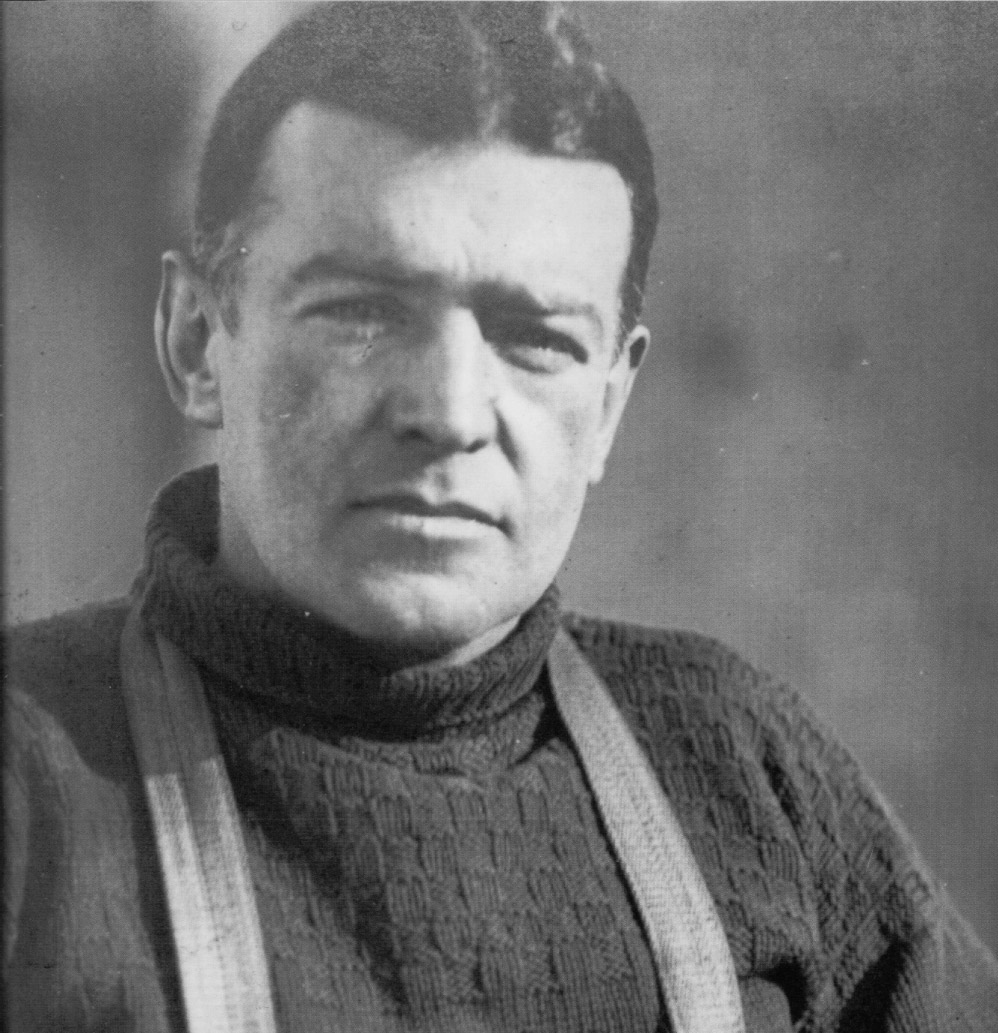
So, what I learned through reading the beginning of the book ISN'T to criticize great leaders for making mistakes, but the fact that even the best leaders DO make mistakes. Knowing that mistakes are (at times) acceptable makes me feel as though I can become a leader one day as well.
But wait, HOW DID THIS HAPPEN IN THE FIRST PLACE?
After reading through the adventures of Shakleton and crew, I didn't understand why such a great decision maker such as Shakleton would choose to throw his crew into an almost suicidal mission. He did have information about how bad the conditions were (the regular conditions weren't even good to begin with) yet he choose to go on the expedition just to prove himself to the world. I wouldn't call someone like that a 'perfect' leader. But then again, who's perfect? In the end he saved everyone and obviously has the qualities of a good leader. It's just that he is still human; he makes mistakes.
So, what I learned through reading the beginning of the book ISN'T to criticize great leaders for making mistakes, but the fact that even the best leaders DO make mistakes. Knowing that mistakes are (at times) acceptable makes me feel as though I can become a leader one day as well.
Subscribe to:
Comments (Atom)